- Educational Exhibits
- Scenography
- Concept
- Implementation
- Gamedesign
- Prototyping
We are planning, designing and implementing several educational exhibits for the new Tierra del Fuego area at Leipzig Zoo. We also contribute to the scenographic concept. In bringing these exhibits to life, we are breaking new ground in many areas.
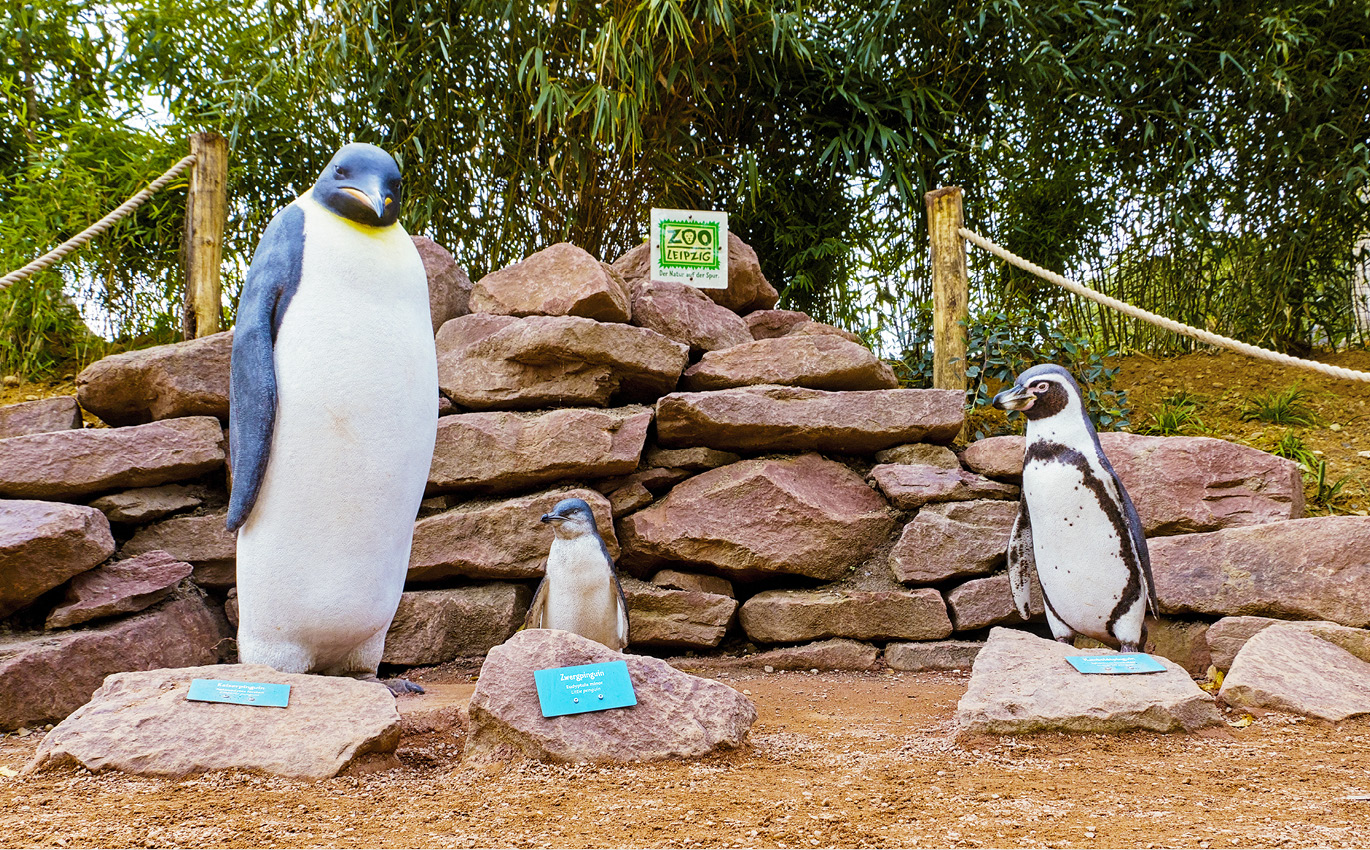
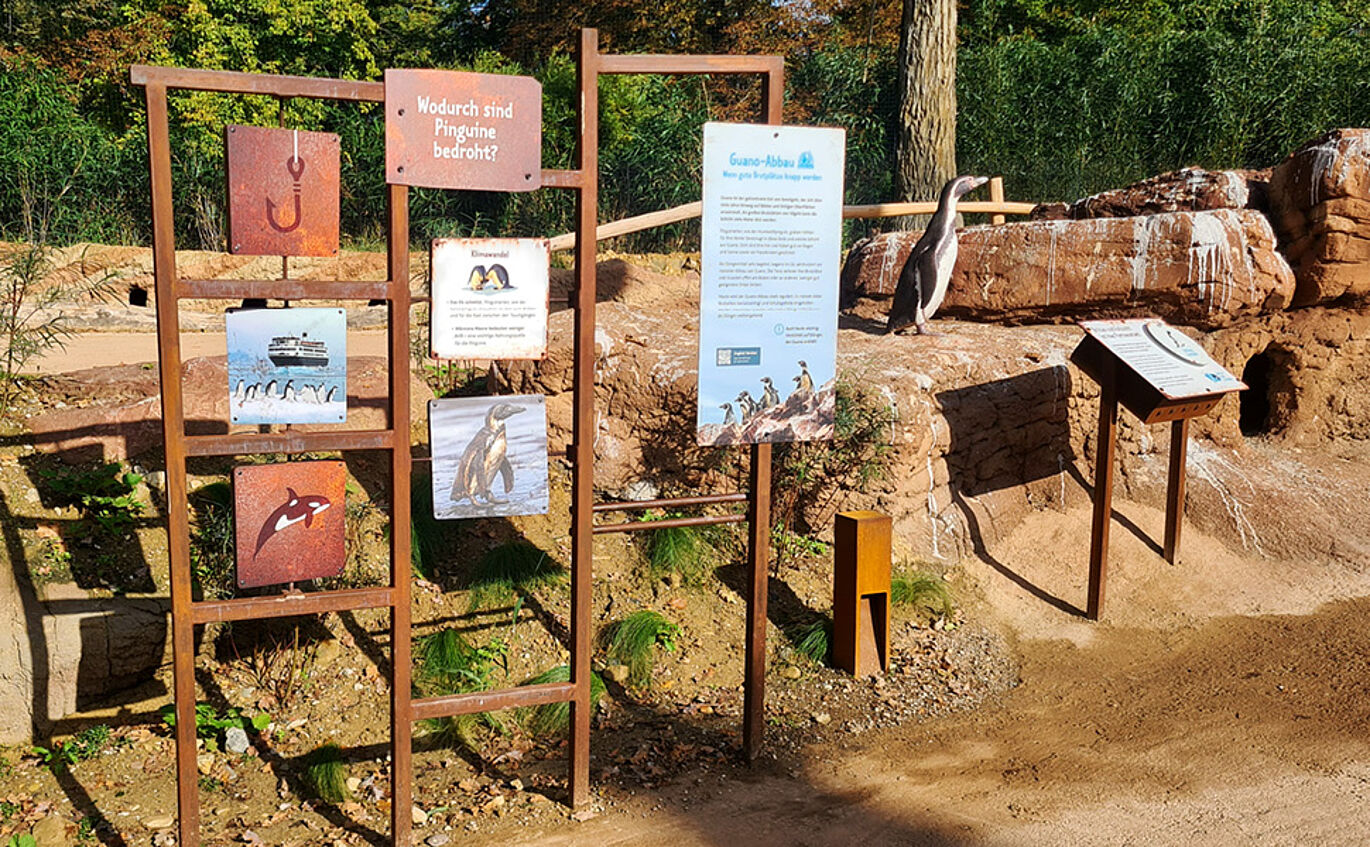
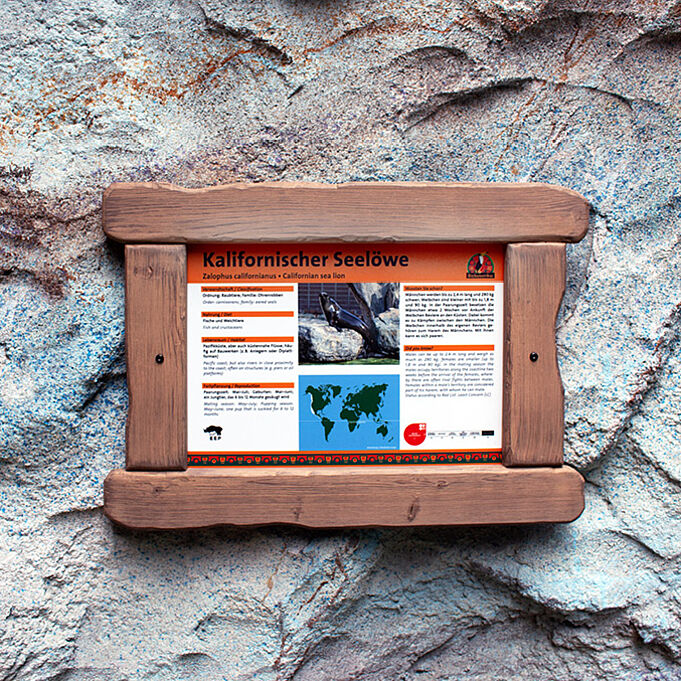
We were commissioned to develop the scenographic concept and to design and implement several educational exhibits for the new ‘Tierra del Fuego’ coastal and marine landscape at Leipzig Zoo. Alongside the penguins and seals, the key themes of our stations are oceans pollution caused by plastic waste. We are designing several interactive educational exhibits that incorporate both analogue and digital elements, developing a game on the theme of ocean pollution, taking charge of all the signage, and planning a series of lifelike sculptures of penguins and a maned seal. We also had the opportunity to contribute to the overall scenographic concept of the enclosure by bringing our own ideas to the project.
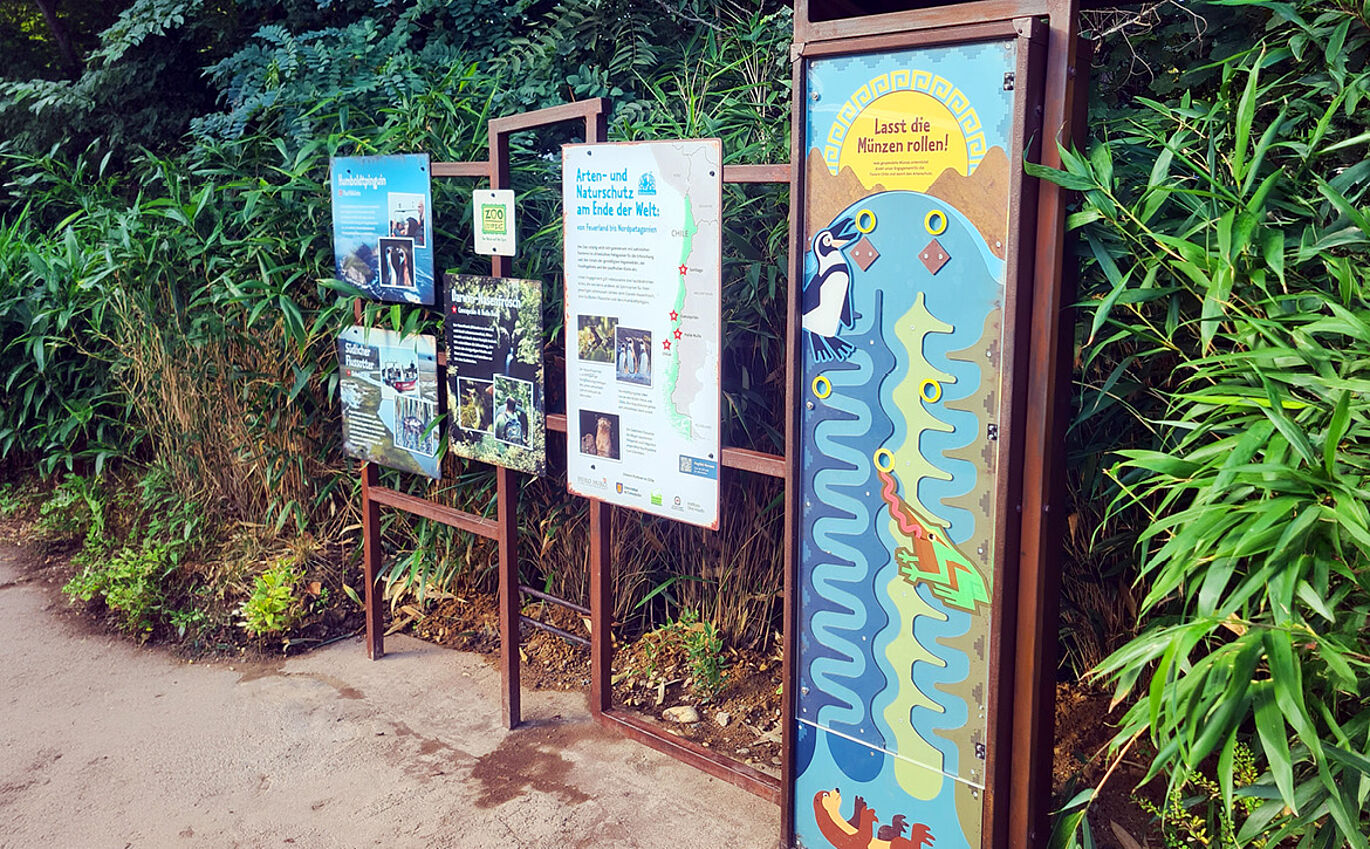
Our scenographic leitmotif is ‘Nature conquers human’. In the rugged, rocky coastal landscape of Tierra del Fuego, traces of former settlement and relics of an era of seafaring can be found. Our concept is brought to life through the creation of a visitor entrance in the form of an upside-down wooden ship’s hull, a walkway leading to the coastal aviary designed as a huge, rusty shipwreck, and the facade design of the toilet facilities.
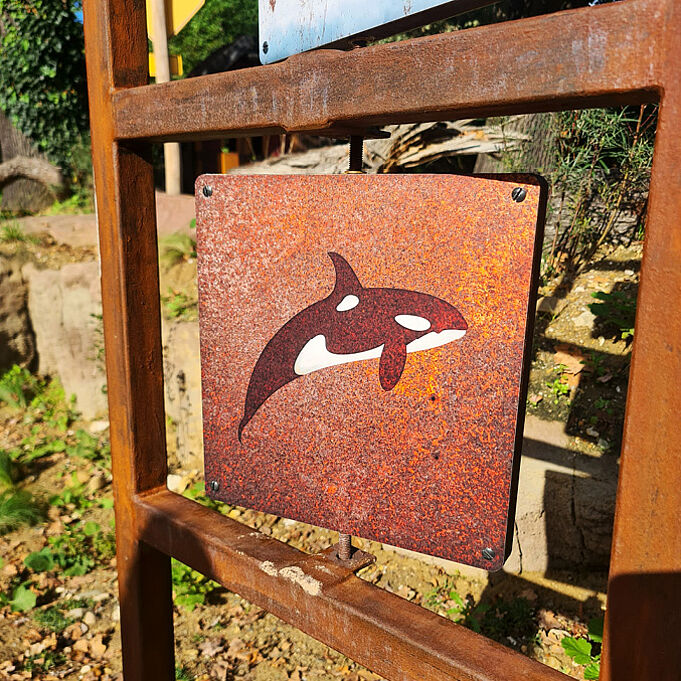
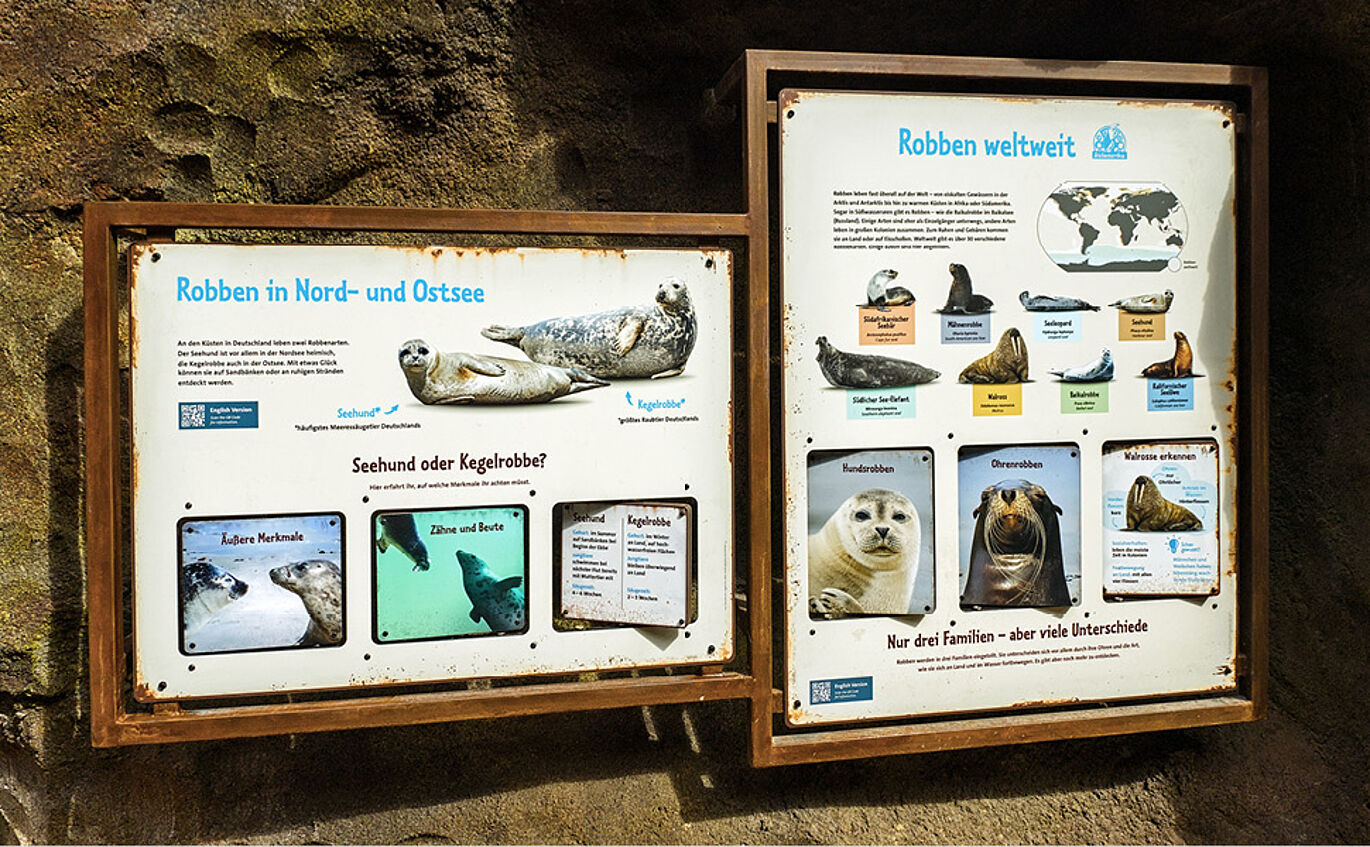
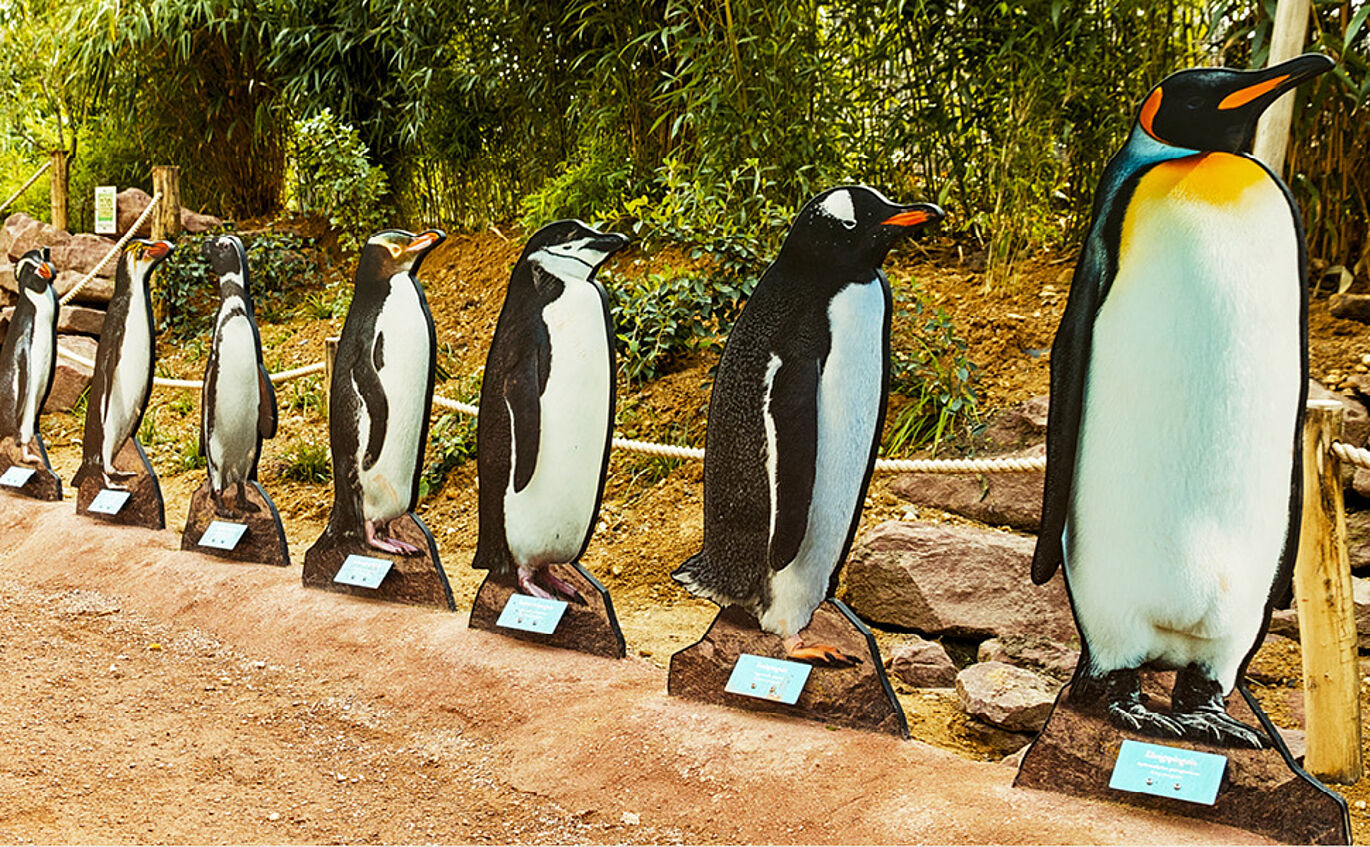
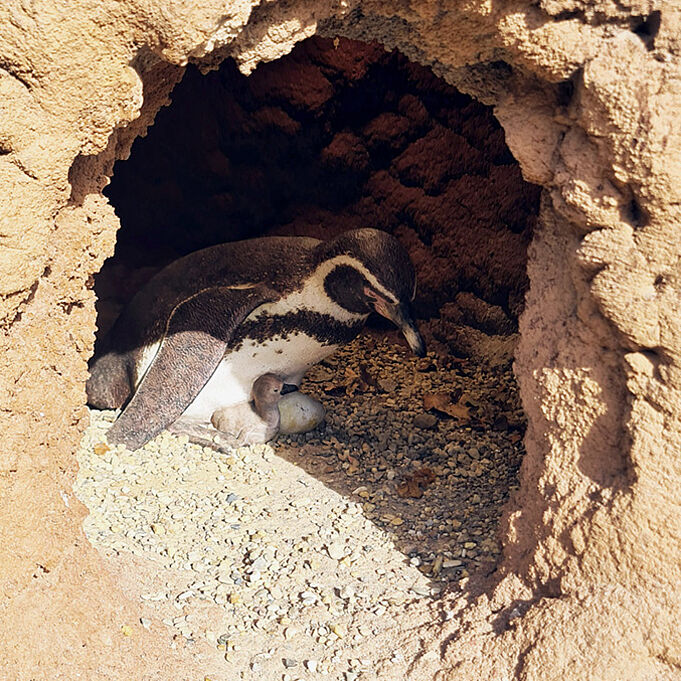
Inside the wreck, we are setting up a ship’s cargo of old wooden crates containing interactive displays on the humboldt penguin and its adaptation strategies. This is complemented by a penguin parade featuring life-size displays of all known penguin species and a photo spot with life-size statues of emperor, humboldt and little penguins. A sound installation made of solid, rusty ship’s steel provides information on distribution ranges and penguin calls. We are expanding the area in front of the aviary to include a 5-metre-high ‘World Waymarker’ that pinpoints Zoo Leipzig’s global species conservation projects. Inside the aviary, a replica penguin nesting cave is being created, featuring a lifelike breeding pair of penguins, as well as an educational exhibit on the threats to penguins. In the enclosure’s underground marble cave, two multimedia stations are being installed to explain how seals adapt to life underwater.
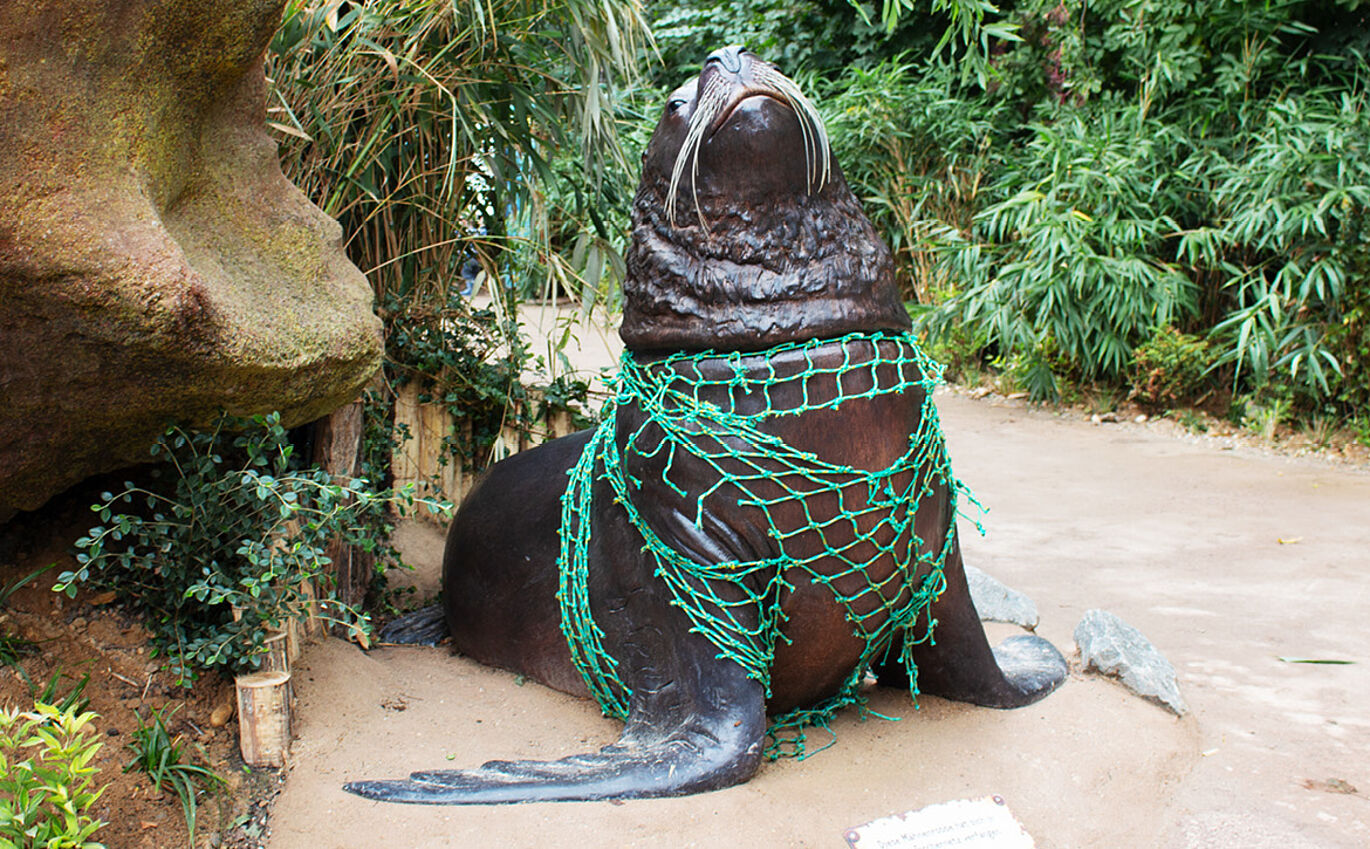
As a deliberate visual contrast, we develop an oversized interactive plastic bottle that raises awareness of ocean pollution caused by plastic waste. This is complemented by a life-size replica of a male maned seal that has become entangled in a fishing net.

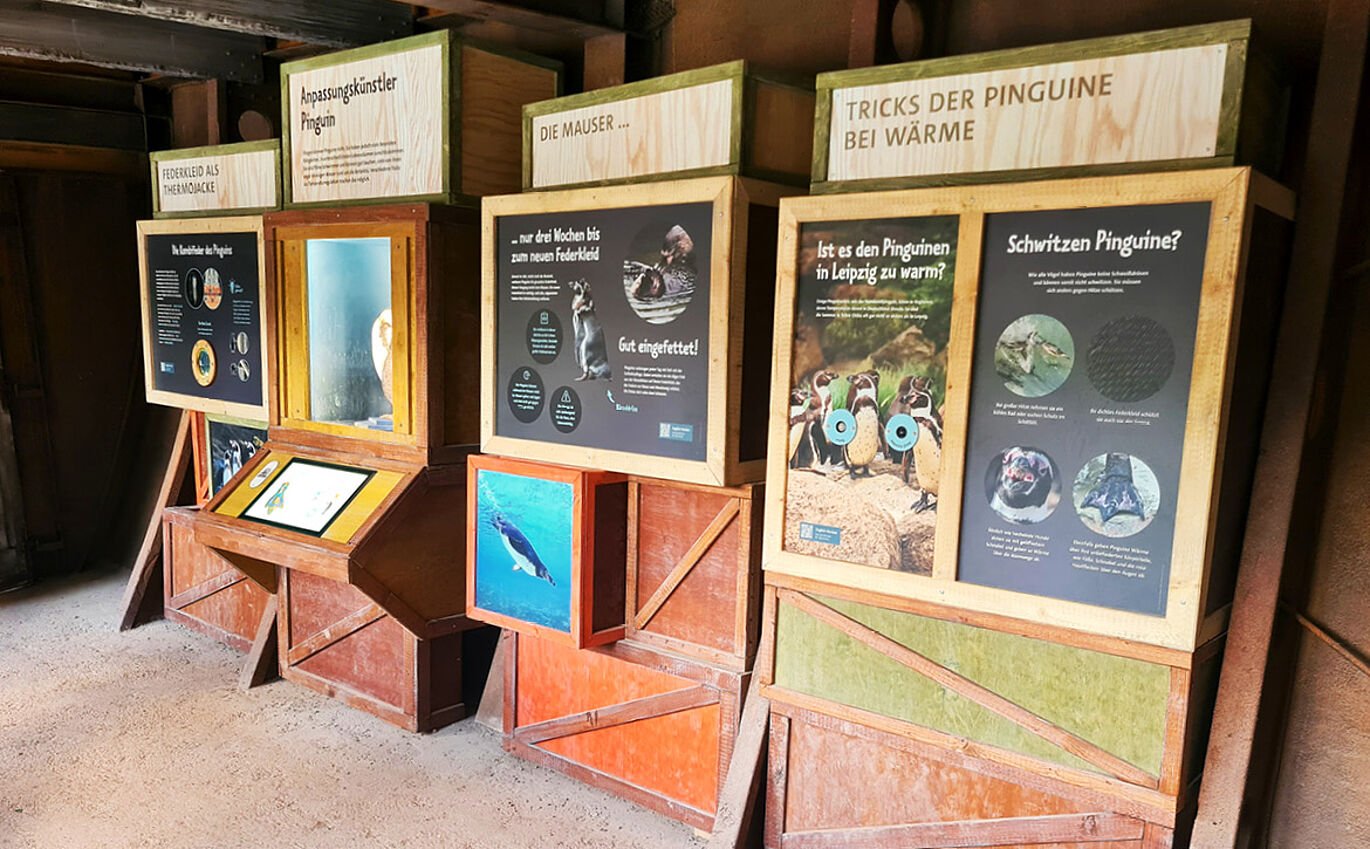
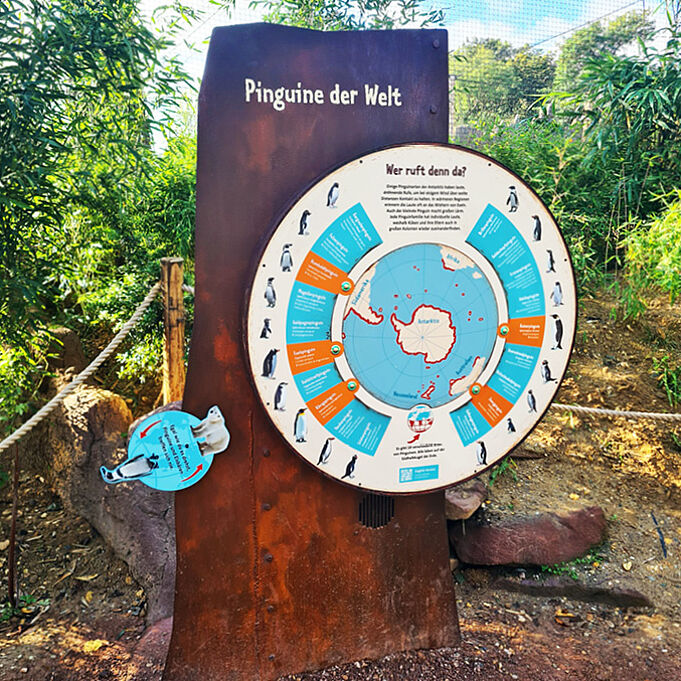
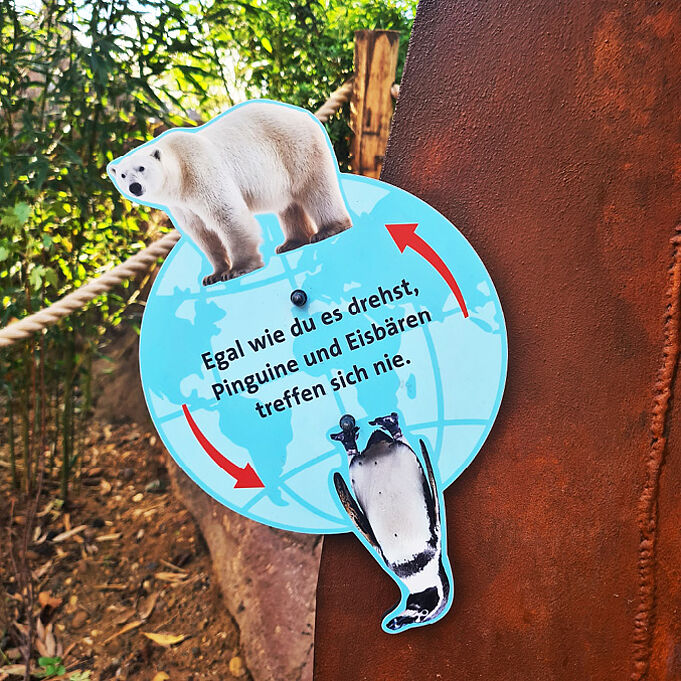
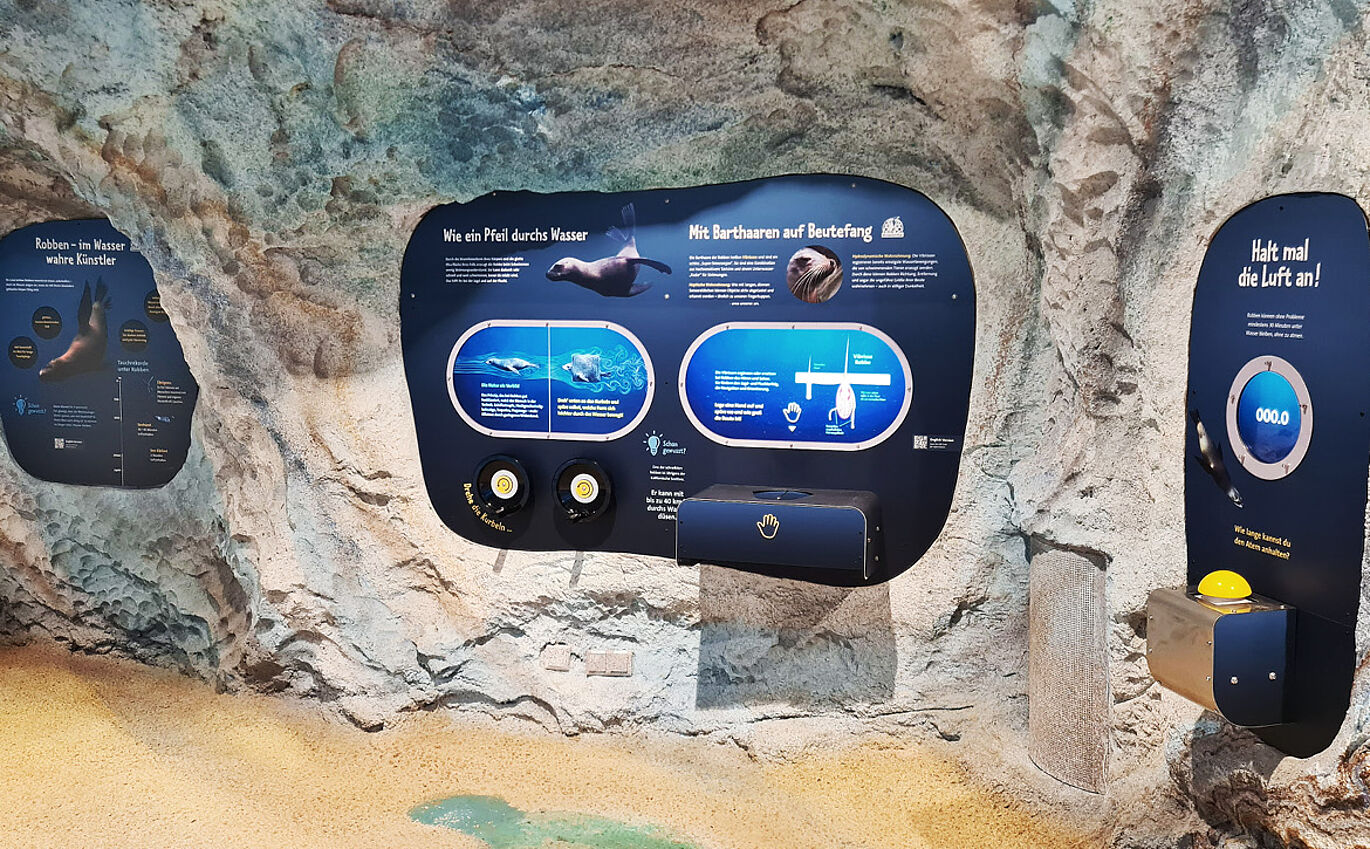
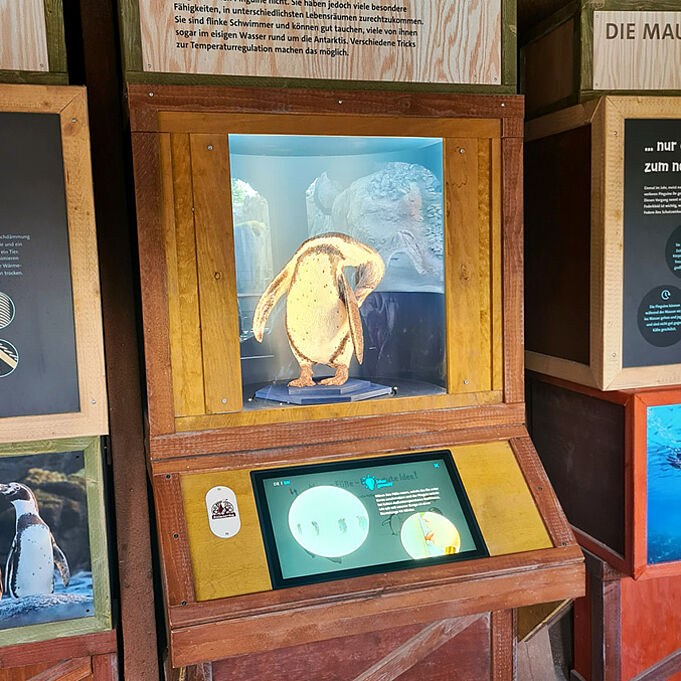
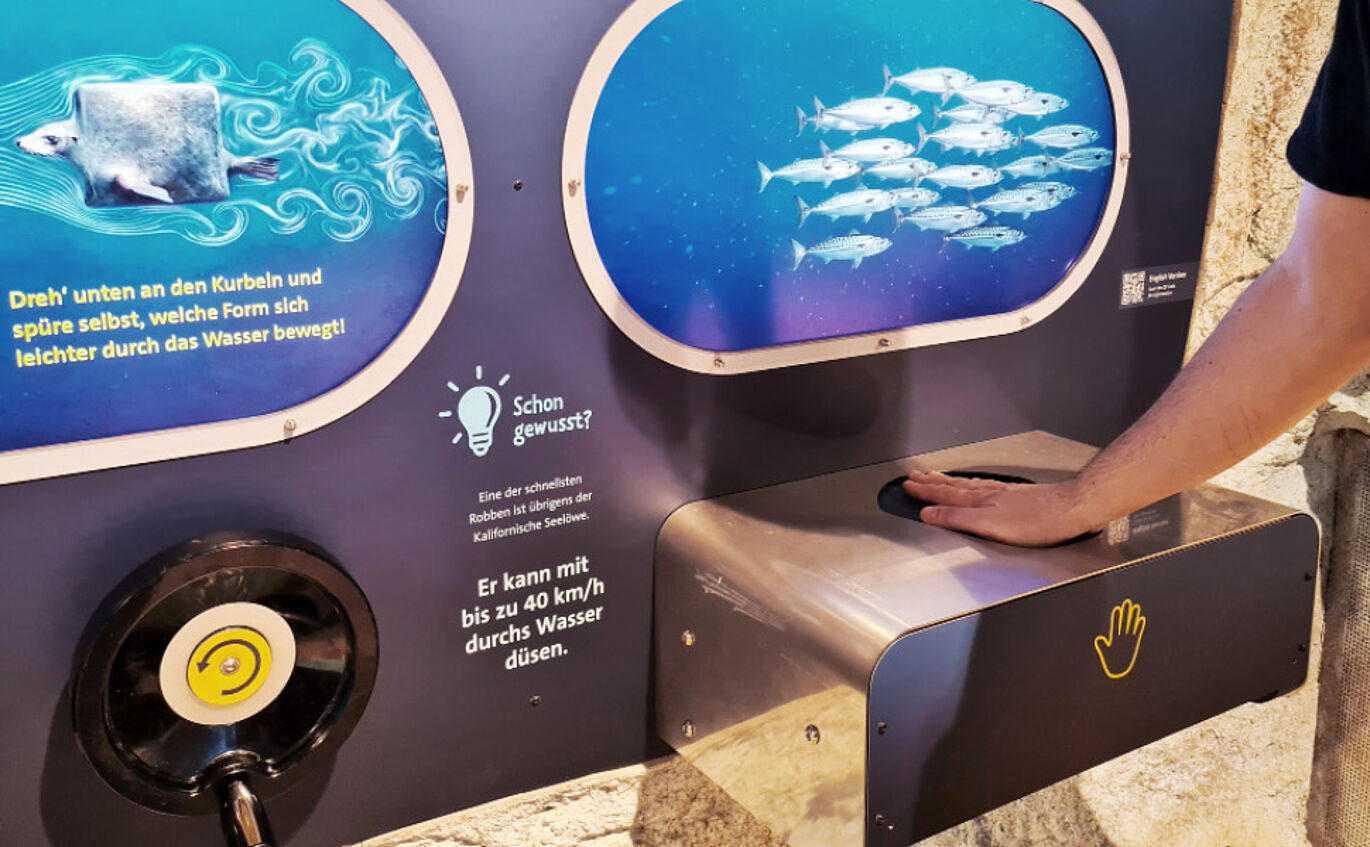
In the implementation, we pay particular attention to haptics and interactivity, and develop a balanced combination of analogue and digital elements. The educational exhibits on penguin distribution, species conservation and seal species all feature classic rotating elements. Inside the ship, there is a display case with a magnifying glass for examining a penguin feather, as well as a large display case featuring a humboldt penguin cleaning itself, which can also be rotated at the touch of a button. Things get experimental with the seals: using crank mechanisms, we let visitors experience the drag resistance of seals (for this, we also make use of a specially developed cube-shaped seal). A vibration-sensitive surface allows visitors to feel the size, direction and number of prey fish – an ability that seals possess via their whiskers. A buzzer measures how long visitors can hold their breath. The giant plastic bottle offers a total of three interactive features: a pull-out cylinder displays a small exhibit and counts the number of lorry-loads of rubbish dumped into the sea worldwide each day. We have enhanced the display with moving images. A specially developed cooperative reaction game allows visitors to clean up the ocean of rubbish. We are also building a playful coin dispenser to support Zoo Leipzig’s species conservation projects in Chile.

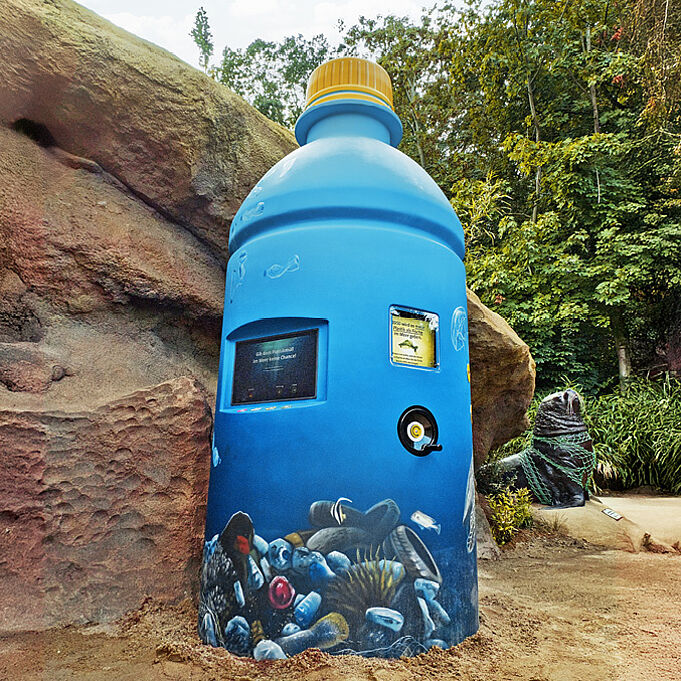
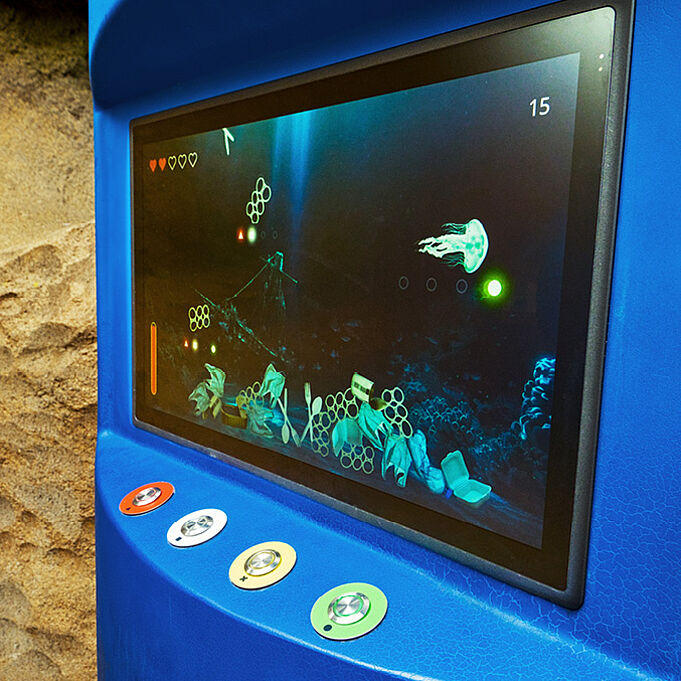

A particular challenge in this project was the prototyping of the ‘Seals Underwater’ media stations and the creation of the plastic bottle. Due to its size, construction and the integration of several interactive and multimedia elements within a very confined space, the project proved to be complex. At the same time, a wide variety of trades were involved in the realisation of the individual stations: landscape architects, theatre set designers, rock sculptors, media technicians, planners and the one or other craftsperson. Bringing together the diverse requirements and visions of the curators at Leipzig Zoo required close consultation and diplomatic coordination amongst all those involved.